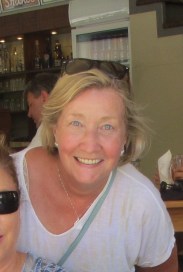
Rich Daley won election for State’s Attorney in November 1980 and was sworn into office in December. I had already told him that I would like to work with him in the State’s Attorney’s Office (SAO) when I got a call from Frank Krusi in January 1981. By then Bob and I already had separated and I was worried about paying the bills if I didn’t get a job soon. So when Frank offered me the job of setting up a Victim/Witness Assistance Program (one of Daley’s campaign promises) I immediately said yes.
By the first of February I was at work in the Administration Building adjacent to the Criminal Courts Building at 26th and California. I was given a desk in a tiny office by the elevators and my only instructions was to develop a program to help crime victims and witnesses served by the State’s Attorney’s Office (SAO).
After a little research I found there was a lone woman working in the Courthouse located at Belmont and Western who ran what was called “Victim Services.” Victim Services, started by the League of Women Voters several years earlier, sent out badly copied mimeographed letters with fill-in the blanks for court location and times to victims and witnesses telling them of upcoming court dates. Becuse the court dates were so often changed or witnesses not needed (for instance they are not needed for a status call) there was another woman who came in late in the afternoon to “call witnesses off”.
My first step was to interview both women. Rose Perez was the woman at Belmont and Western. Rose worn her jet-black hair pulled tightly back in a huge Beehive. She wore deep red lipstick, was a tall, large-boned woman who was extraordinarily polite and spoke in a monotoned voice. Talking to Rose would put you to sleep. She did exactly has she was told and had no room for creative thinking.
Next on my list was Ann Lynch who was the woman “calling off witnesses.” I happened to be sitting in an assistant state’s attorney’s (asa) office when her name came up. So I asked if he knew her. ”Yes,“ he replied, “Ann is the girl who works on the 13th floor and comes in at 3 o’clock.”
As he described her as “the girl” I was completely taken back when I finally met Ann. Ann was a white-haired mature woman who left her “girlhood” long before I met her.
The “Women’s Lib” movement was underway at that time. Up until that then I had not paid much attention to the instance of the movement’s call for women to be called “women” as opposed to being referred to as “girl.” After I met Ann I understood.
Shortly after meeting Ann, I ran into that same asa in the hallway. I looked at him and said, as pleasantly as I could, “I met Ann Lynch yesterday. Ann really is not a girl; in fact, she could be your mother.” He just looked at me quesitcally – – I hope he thought about it later and had the same enlightenment I did as a result of meeting Ann Lynch.
Back to the story. I soon realized that the badly formatted letters Rose Perez was sending out and Ann Lynch calling people telling them not to come in were far from enough.
As background, the Victim and Witness programs really started with the feminists movement which recognized the need to provide special care to victims of rape and domestic violence. The first victim assistance programs in the United States were rape crisis centers in Washington, D.C., and the San Francisco Bay area.
Gradually prosecuting offices were beginning to recognize that all victims and witnesses of crime needed more services. When Rich Daley ran for Cook County State’s Attorny in 1980 it was still a new concept. So one of his main campaign pledges was to initiate a Victim/Witness Program. His asking me to take on this job, I thought, demonstrated his confidence in me,
After assessing the services – or lack thereof – in the SAO, I visited several sexual assault and domestic crisis centers across the country to understand better what services were needed and how best to deliver them. I remember one in particular; it was in Arizona. I went out one night with the crisis workers. They were called for domestic violence situation which occurred on a military base. The husband (the offender) had already been removed from the premises. We went in to talk to the woman who reported the attack.
I watched and listened as the trained crisis worker spoke with her. Now she was denying any violence from her husband. It was all a mistake – he should come home. But as she sat there, she kept rubbing her arm. I paid a little attention. But the crisis worker eventually said to her, “you’re rubbing your arm can I see it?” When she reluctantly pulled up her sleeve it revealed nasty black and blue marks all the way up to the shoulder. That’s when she broke down and cried. And the policeman in the room knew he had a case.
Women like the one above – who had been victims of domestic violence or those who had been victims of sexual assault – needed more than to just be told when to come to court. First and foremost they needed someone to listen, someone to be there for them. Eventually they would need counseling. Many needed a safe haven or help with their children. When the time came to face the perpetrator in court they would need someone to hold their hand, someone to tell them what to expect, someone to assure them that they need a not be afraid.
My research complete, I realized my first job was to convince the assistant state’s attorneys that the Victim/Witness (VW) staff would be there to help them not to hinder them. When an assistant states attorney begins to prosecute a case she doesn’t want anyone near her witnesses except herself. She doesn’t want their testimony jeopardized in anyway. That was the first thing I had to understand and the first obstacle I had to overcome.
My job was to convince them that we were there to work with them to make the victims testimony even better. We would do that job not by talking to witnesses about the case but they helping them emotionally.
We took a while, but overtime most of the assistant state’s attorneys were won over by the Victim/Witness staff I hired. Staff would talk to the victims and witnesses to understand the issues they had us a result of the crime, and to find solutions for those issues. Sometimes it meant applying for victim compensation through the state. Sometimes it meant counseling. Sometimes it meant relocation or help finding a new job. Many times it meant just listening.
Finally it all came down to the day they were to testify in court.
Most people have no contact with the court system, so they have no idea what to expect. The same is true for most of the victims and witnesses who go through the criminal court system. So one of our first jobs was to explain the court system and exactly what would happen at each step – – – the Preliminary Hearing, the Arraignment, the various pretrial motions and status hearings and finally the trial – – bench trail or jury trial.
I also developed special services for children that needed to testify. The big old courtrooms to 26th St. frightened of a lot of adult witnesses. I’m sure it was completely overwhelming to children. I came up with the idea of Hamilton Hippo.
Hamilton was a big purple hippo who explained the court system to children in language they could understand. We had a costume made which one of the advocates would wear. A week before their court date, we would have the child and his or her guardian come in and Hamilton the Hippo would walk around the courtroom with them to familiarize them with their surroundings, so it wouldn’t be so overwhelming to them when they had to testify.
We had judges volunteer their time to come in and sit on the bench, and talk to the children. Many times the judges would take them up on the bench with them, and let them pound the gavel. As each child left, we gave them a coloring book in which Hamilton the Hippo would go to court.
Another program I’m really proud of is a program I started for the families of murder victims. It was a support group to help them through probably the most horrible time in their lives. As I did when I was started the V/W program, I did a lot of research. Which meant I attended a lot of established support groups. The most memorable support group was the SOS group. Survivors of Suicide. SOS was run by the archdiocese of Chicago. I attended a meeting at St. John Fisher Parish Hall.
Most of the people at this meeting were parents of young people who had killed themselves. I won’t even get into their stories, but trust me – it was brutal.
I was a single mom at the time and struggling financially. The only car I had was the one issued by the state attorneys office, which was a beat up old car that has been confiscated in a drug bust. After listening to the heart wrenching stories I heard at the meeting, I no longer cared about driving a beat-up car. I was thankful to God for everything I had – – – most especially my three healthy, good children.
I started the support group with the help of two people; Father Gavin Quinn and Nina Helstien. Gavin Quinn, as you all know, I was a classmate of Dave’s in the seminary and an excellent priest, counselor and speaker. He spoke at the first few meetings.
Nina was a rape victim who came through our system and eventually became a very dear friend of mine. Nina was a psychologist who lived in Hyde Park. She woke up one night with a man raping her. Thank God she lived through the attack and was able to call the police. She said they were very sensitive and tactful questioning her. Finally, she looked at them and said “this was not my fault. Somebody did something terrible to me, and it’s his fault not mine. So you don’t need to be careful with your words. I feel no guilt. I feel no shame. Just anger at the person who did this to me.”
I thought that was a pretty healthy reaction. So when it came time to start the support group, I asked Nina if she would lead it. And she did for many years.
I could go on with stories from my SAO days. Like the Friday night I was called back late to testify in a case in which a man set his girlfriend on fire. I had interviewed the woman earlier in the week. She was so badly burned that she could no longer take care of herself. She was an African-American woman who had been at Oak Forest Hospital since the attack. Her face was badly disfigured by the flames and she couldn’t use her hands – her fingers were all fused together.
I was about to include the description of many other cases I worked on, but it was bad enough that I witnessed the terrible things some people do to others. No need to share it with you. Suffice it to say that after nine years of working at 26th in California, I would literally get sick to my stomach every time I walked into the building.
After Rich Dailey left the office to become Chicago’s Mayor in 1989, Cecil Partee became the new State’s Attorney. Cecil was a good man, a good State’s Attorney and he was good to me. I enjoyed working with him. But it was the time to move on.

 Growing up in Chicago in the '50's