by Eileen Donnersberger on June 06, 2020.
My sister called one hot summer’s day in 2014 asked if we’d like to join them on a trip to Morocco. Thinking she meant Monaco I readily agreed. Morocco, it turns out, is a long way from the glitz and glamour of Grace Kelly’s adapted country. But we enjoyed the medinas, the kasbahs, the desert – – and especially the people – – far more than we would have ever anticipated!
Morocco is in North Africa across the Straits of Gibraltar from the Costa del Sol in Spain. A developing country, it is 98% Muslim. Maybe best known as the setting for the movie Casablanca (although the movie itself was shot in Hollywood, not Morocco), it is boarded on the north by the Mediterranean Sea, on the west by the Atlantic Ocean and to the east by Algeria. To the south is an African country called Mauritania.
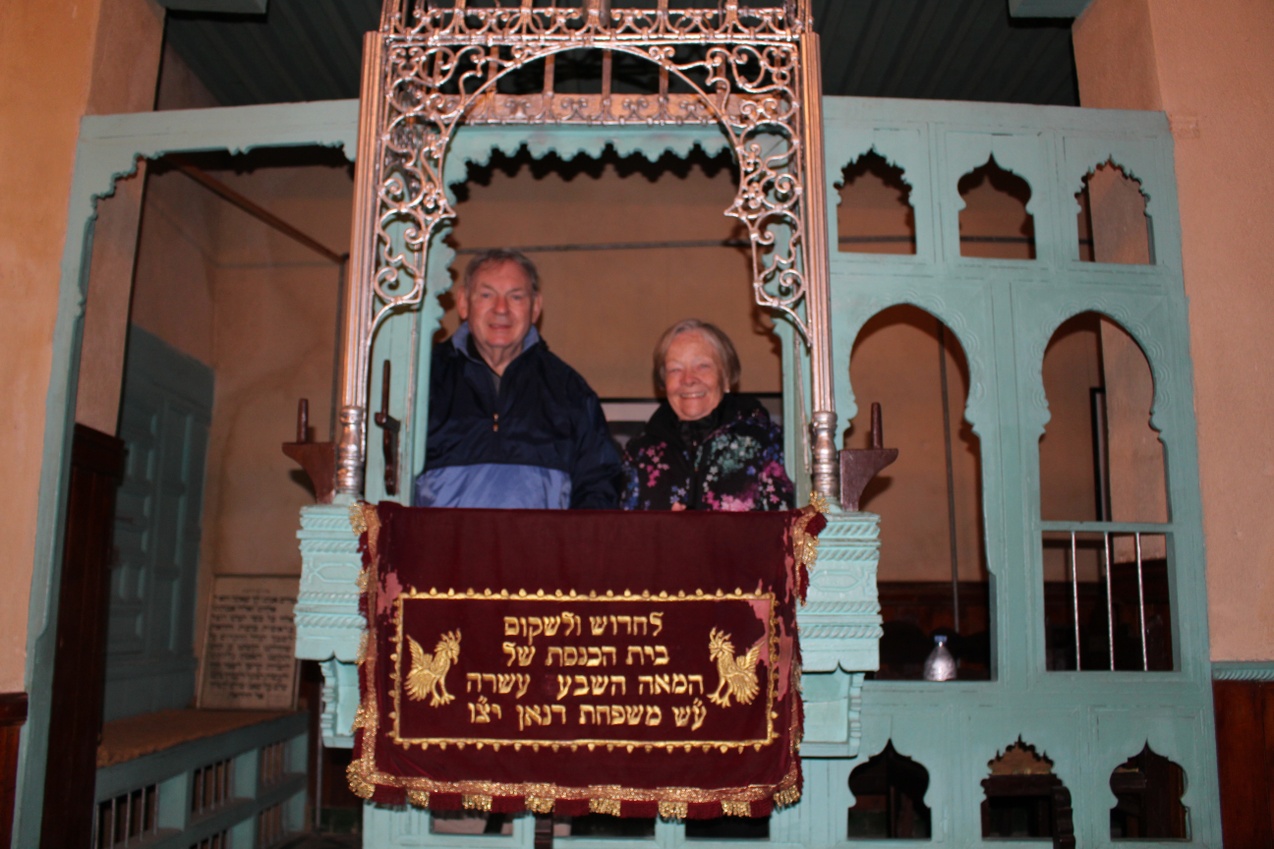
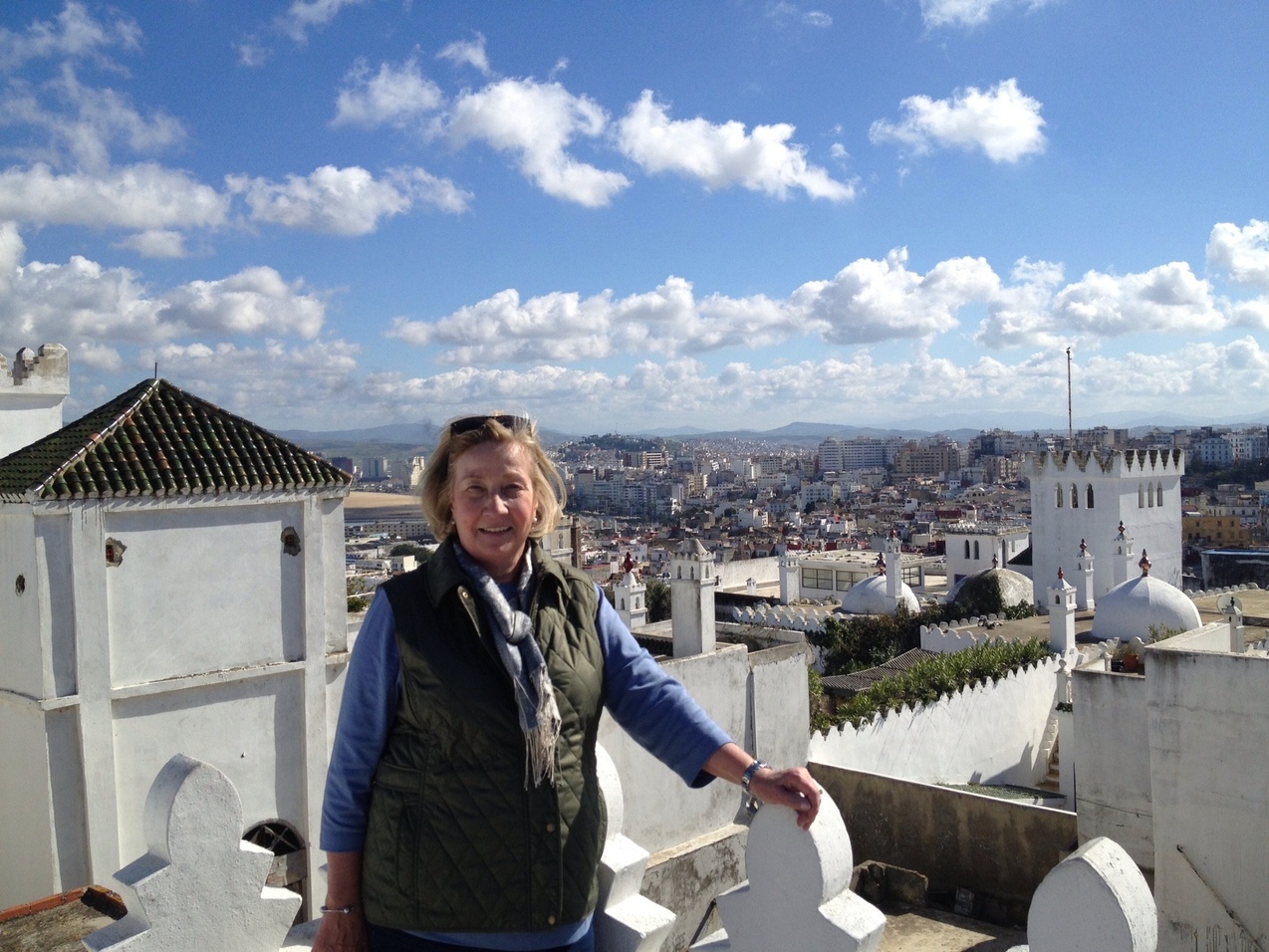
In addition to its beautiful coastal areas, Morocco is characterized by rugged mountain interiors and large portions of the Sahara desert. And we visited them all! Traveling for sixteen days, we spent time wandering the old Medinas and Kasbahs in towns such as Tangier, Fez, Tienghir and Marrakesh.
Medinas, for us city-folks who live in the 21st century, are centuries-old walled sections of a city that contain numerous narrow and maze-like streets… if you could call them streets. They are more like small lanes; once in a Medina it’s easy to get lost and difficult to find your way out unless you have a guide. People still live and work in the Medinas. Kasbah’s are the market areas within the Medinas. With stalls full of goods the Kasbahs are bustling with shoppers.
Since refrigeration is scarce, shopping for food is a daily event for woman. Men own and run most shops. The “shops” are not what we would recognize as a shop or store. Rather they are a series of small stalls on the sides of the narrow lanes which can be owned or rented. Women make their bread daily and most (without ovens of their own) take it to a local baker to be cooked. The baker’s oven is a large hole in the brick wall. He keeps wood burning on the sides so he can slip loaves of bread in the middle.
But what impressed us the most, what captured our hearts, our souls and our imaginations, were the people of Morocco. They were warm, welcoming and very, very kind.
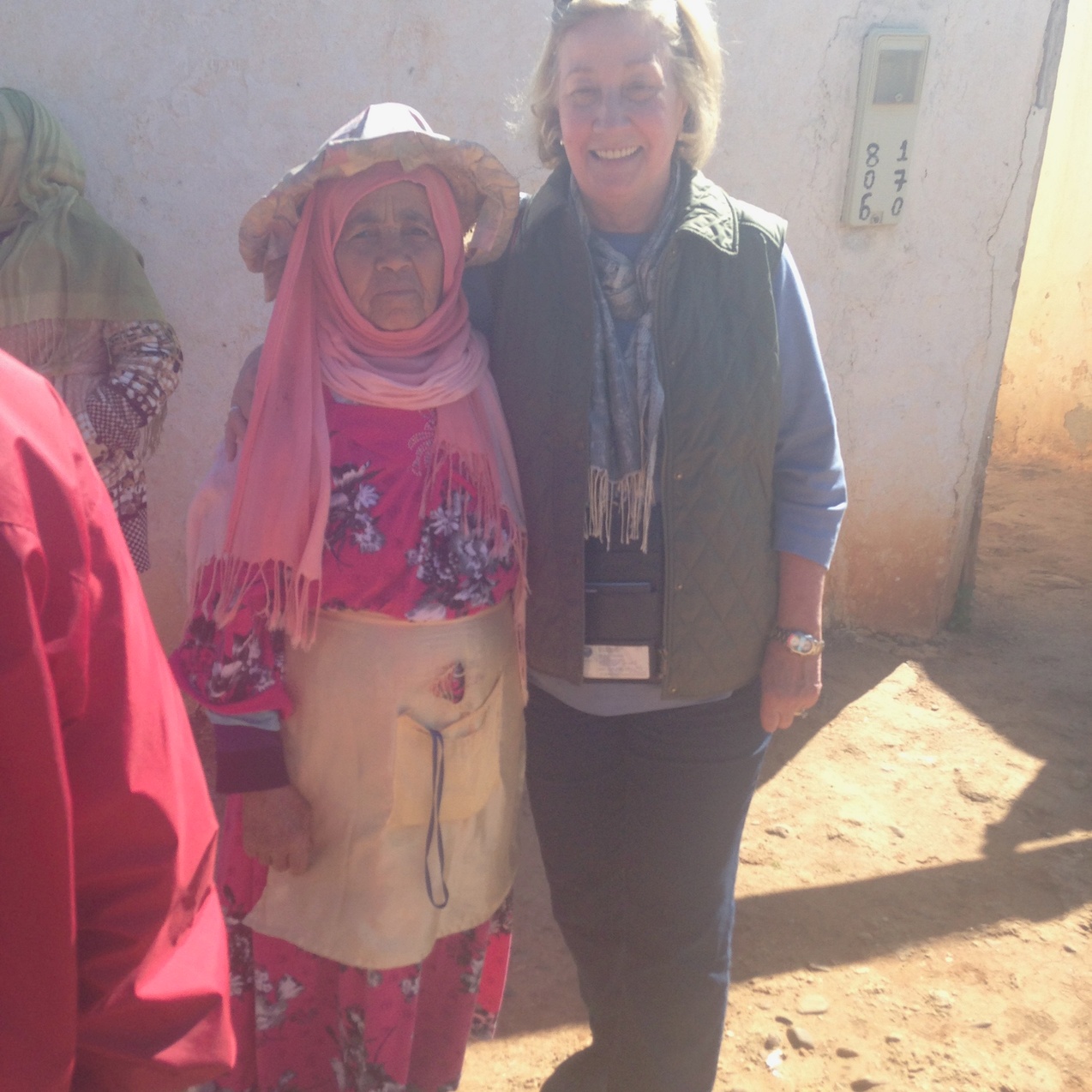
For example, we traveled to the mid-Atlas Mountains where met a Berber family. Members of the family were on the side of the road selling chickens and when we stopped to talk with them they invited us into their home.
The older grandma, who was watching the little children, welcomed us with a huge, warm smile. With a great deal of pride she showed us around their humble home and even offered to make scramble eggs for us. After retrieving fresh eggs from the hens she she invited us into her kitchen and enlisted the help of some of our group to help cook the eggs. They didn’t have much by our standards, but what they had they wanted to share.
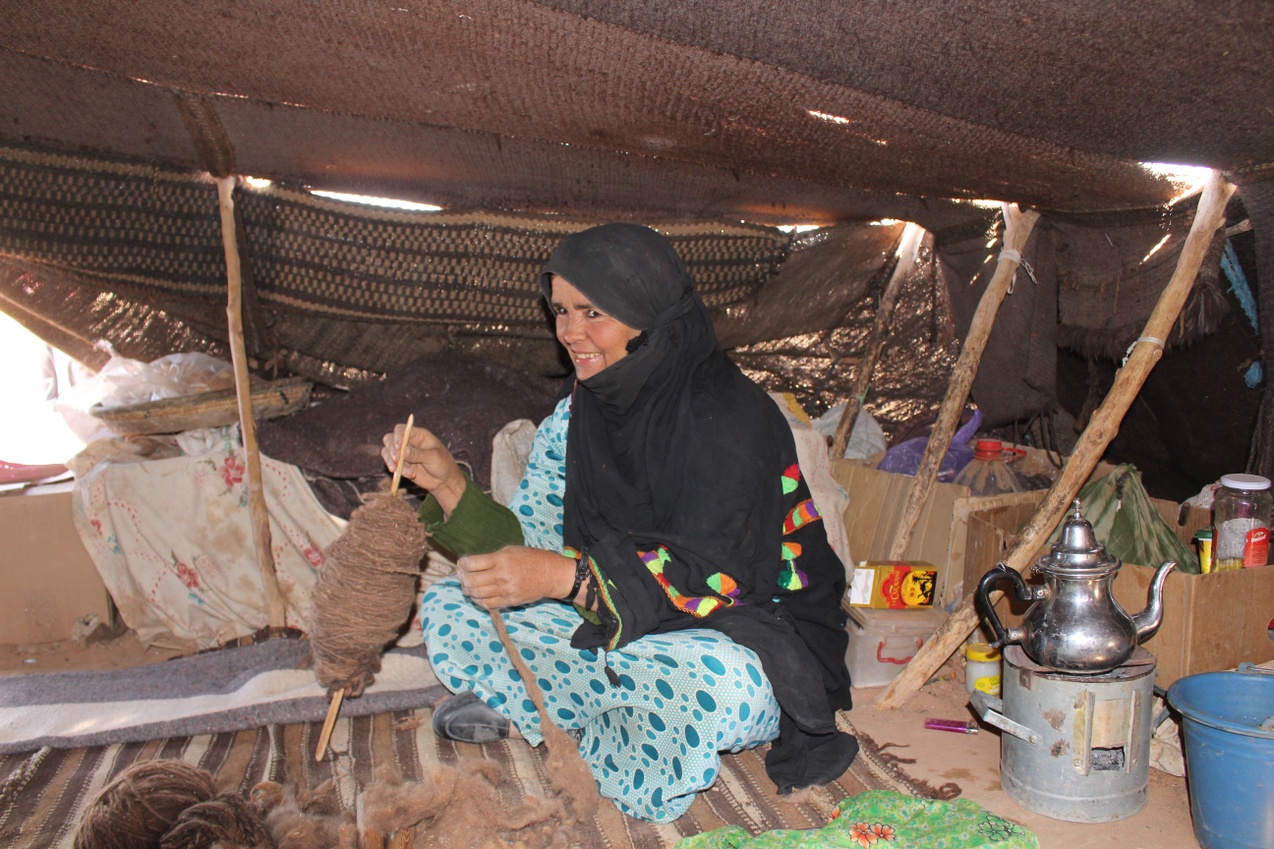
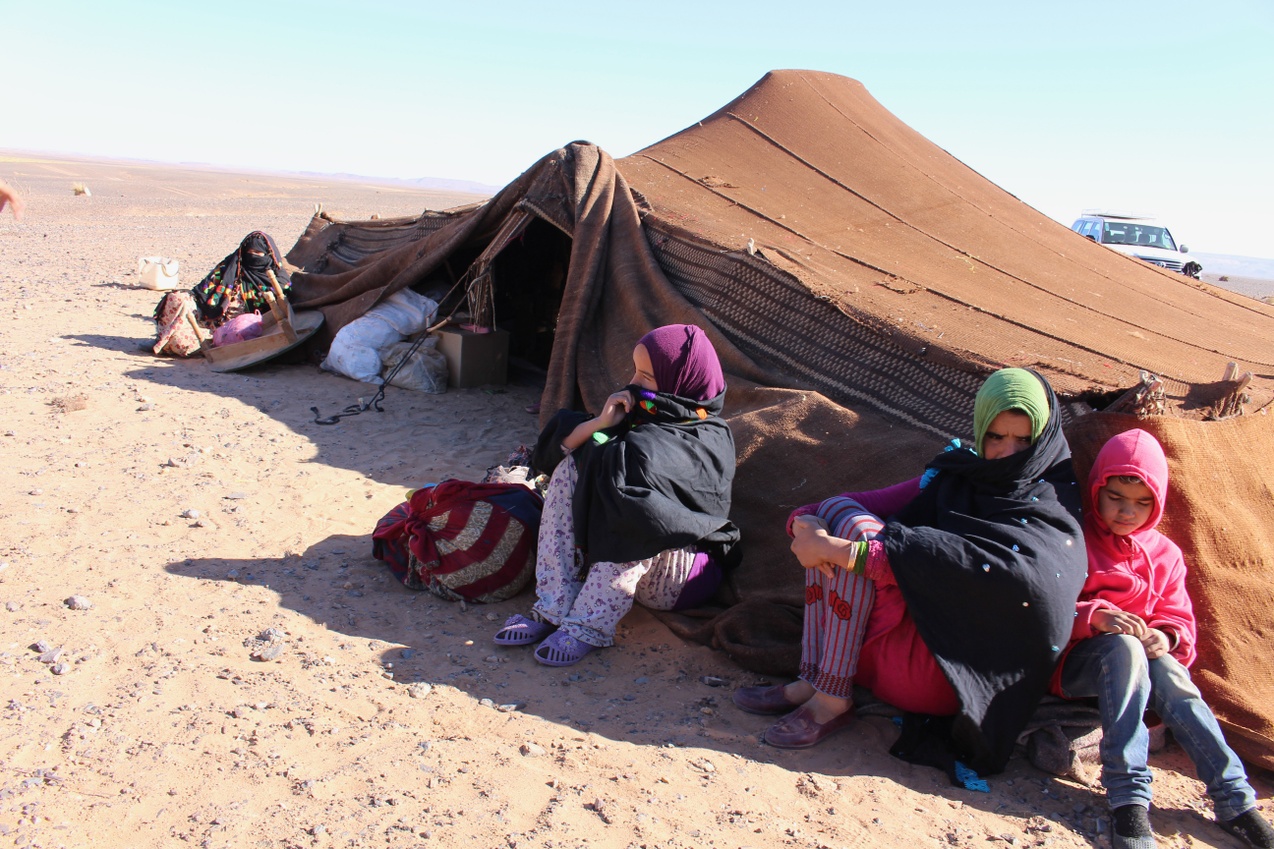
Down the road, our travel guide took us to visit another Berber family; this one a semi-nomadic family. The men were at the market that day while the women tended the children and the animals. The semi- nomadic families relocate twice a year so their homes are a bit more substantial than the nomads who move about every 3 – 4 months. Once again we were invited into their home and through a translator were able to ask them questions. The dwelling they lived in is completely dismantled when they leave and the wooden logs on the ceiling are taken with to use at another location.
For thousands of years, the Berber nomads and semi- nomadic families have been living by moving when the food supply for their animals run out in a given location. Their animals can include goats, sheep, hens, roasters, mules, dogs and camels.
The Berber nomadic family we visited live in the Sahara desert in a tent made of camel hair. We watched while the mother cleaned and spun the camel hair into tread to be used to make clothes and even the roof over their heads. The carmel hair tent keeps it about 20 degrees cooler inside than it is outside – – which in the summer can reach 130 degrees fahrenheit – – and warm during the cold desert nights. (it can get down to 30 degess fahrenheit at night).
We stayed in the Sahara Desert and slept in tents too, but they weren’t made of camel hair. Nor did we have to sleep on the ground as the nomads do. Unlike the nomads, we were able to stand upright in our tents and we slept on fairly comfortable cots. We even had a small light which was solar powered. The nomads use candles for light.
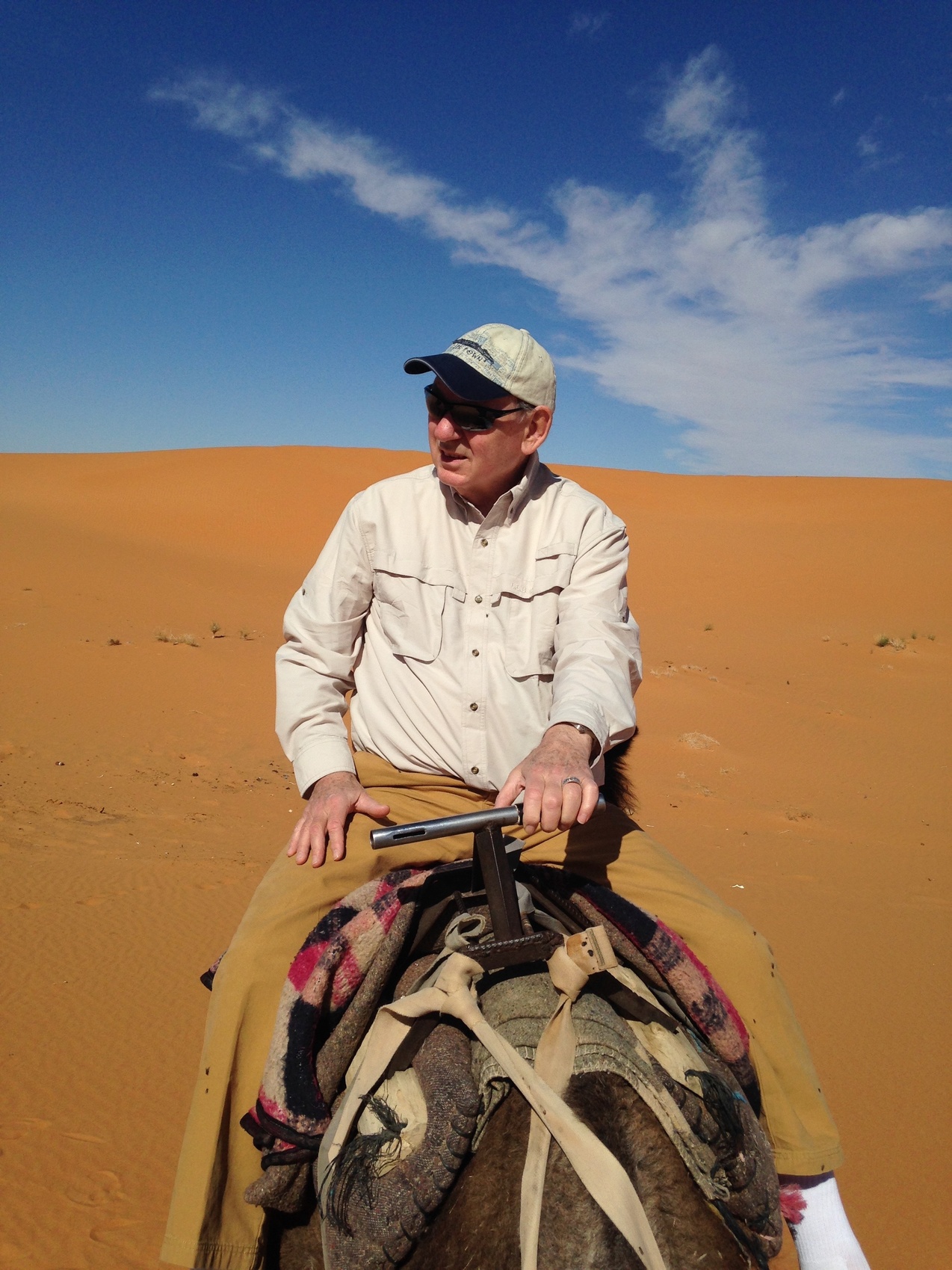
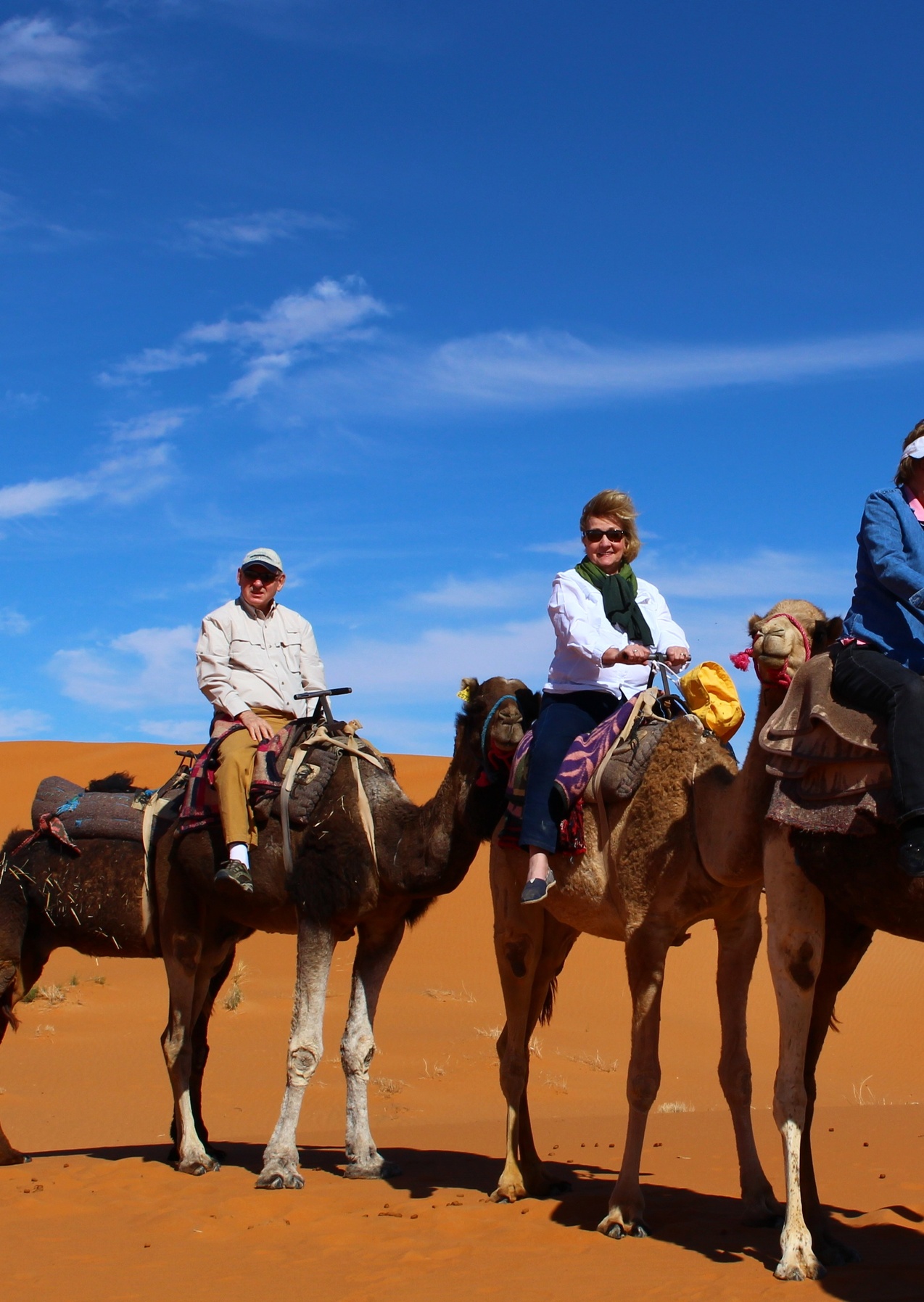
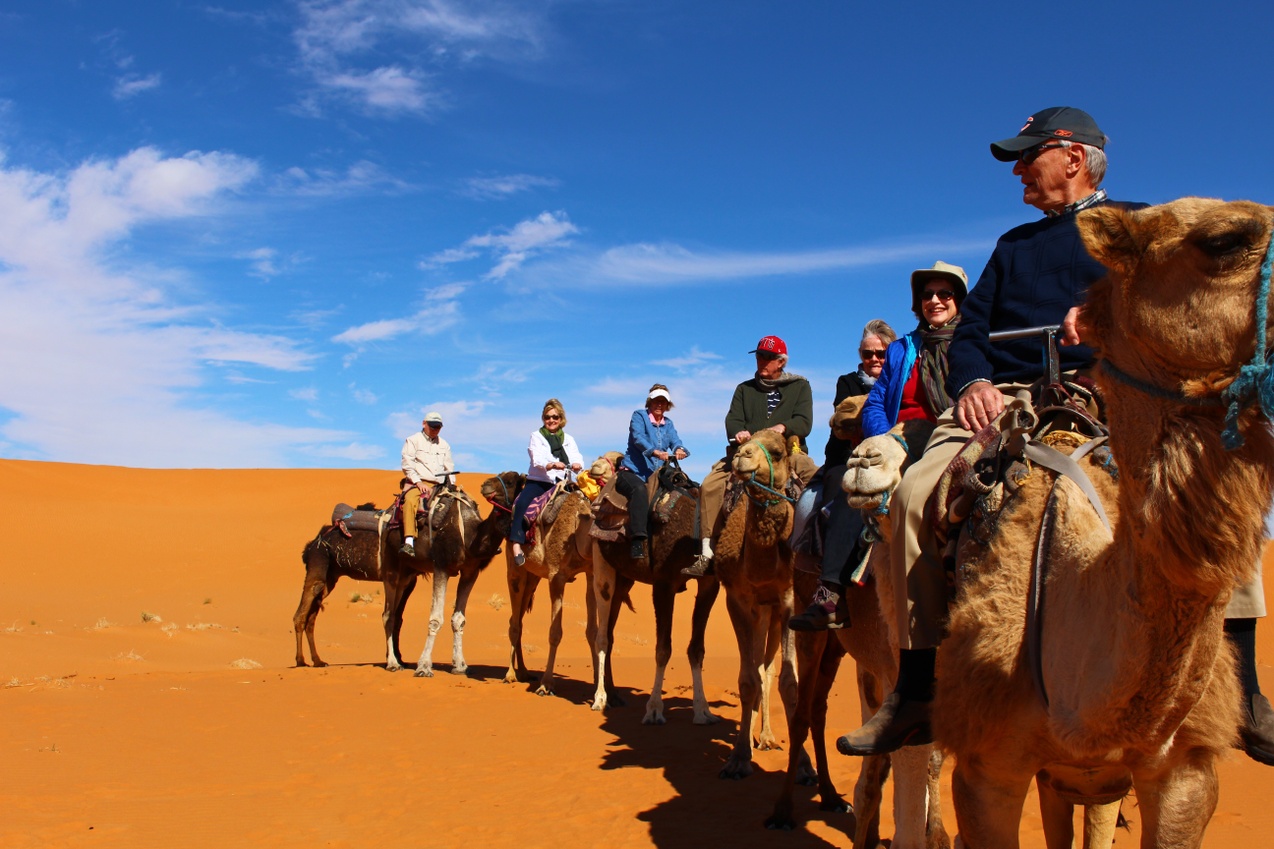
We traveled to our camp site in the desert by jeep and camel. The camels ride was a bit uncomfortable but fun. The jeep ride made us feel like we were in an Indiana Jones movie! In order not to get stuck in the sand, the drivers had to zig-zag all over the dunes.
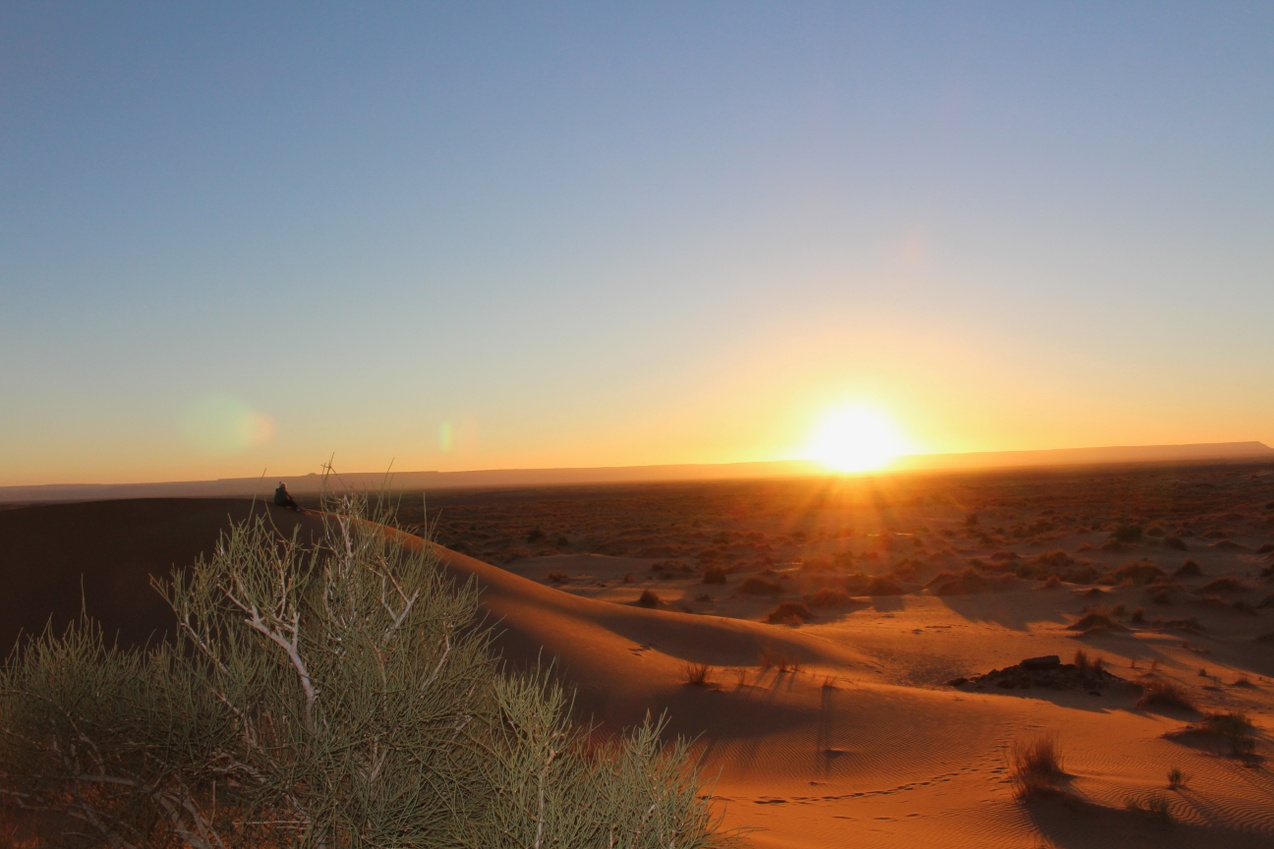
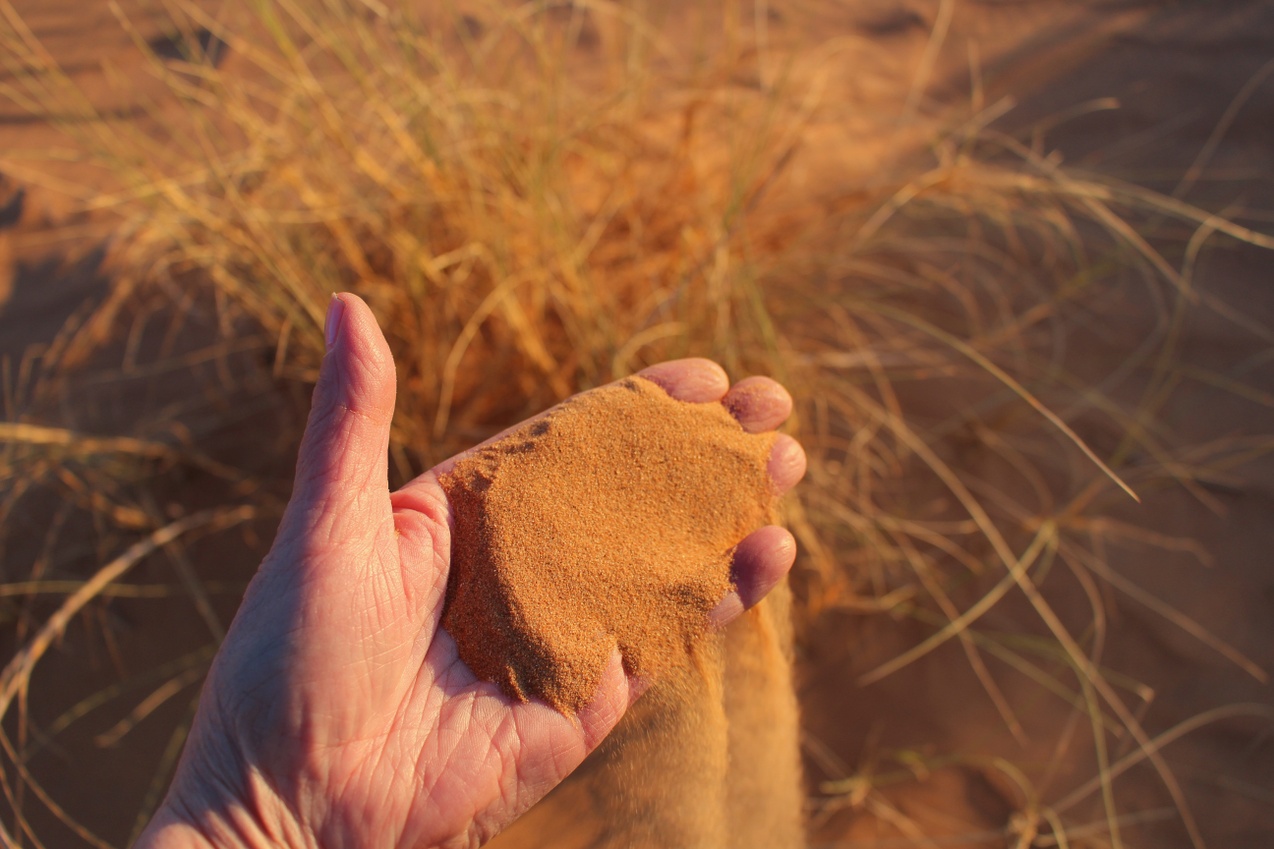
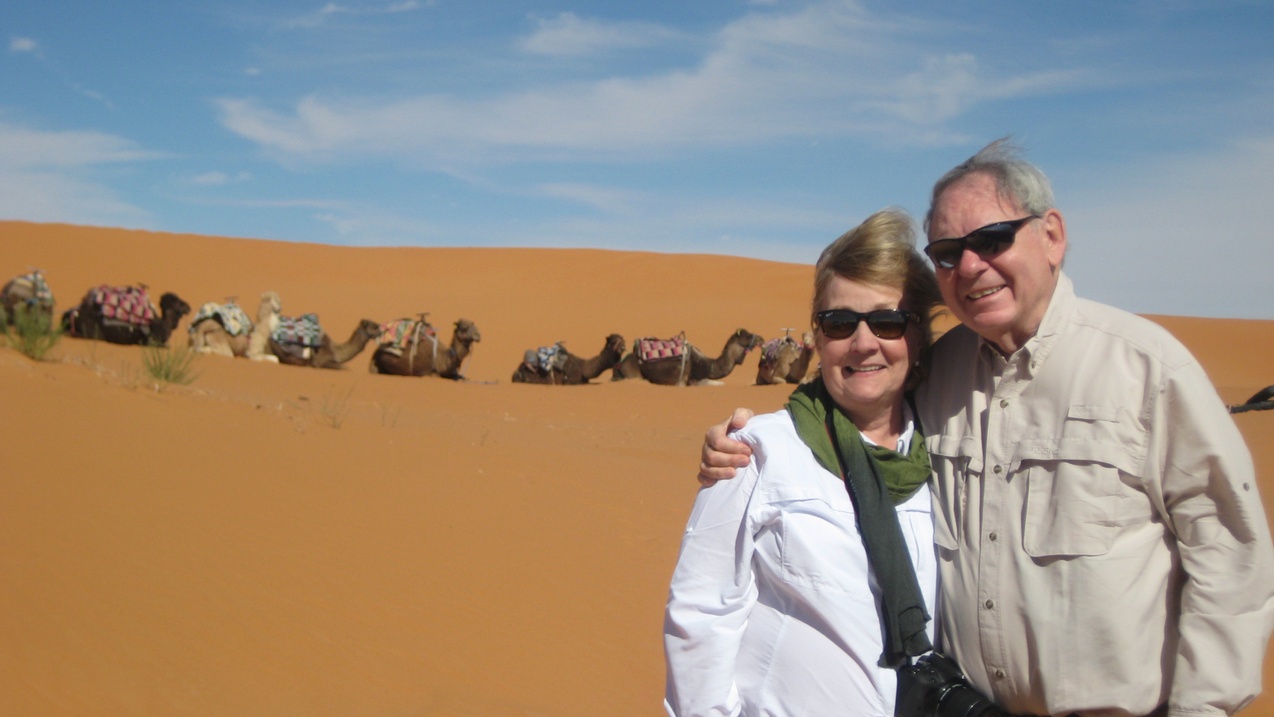
The sand in the Sahara is nothing our Lake Michigan sand… the Sahara sand is silky and a beautiful orange color.
We rose early the first morning in the desert to watch the sun rise and stayed up late every night to be amazed by the number of stars in the sky.
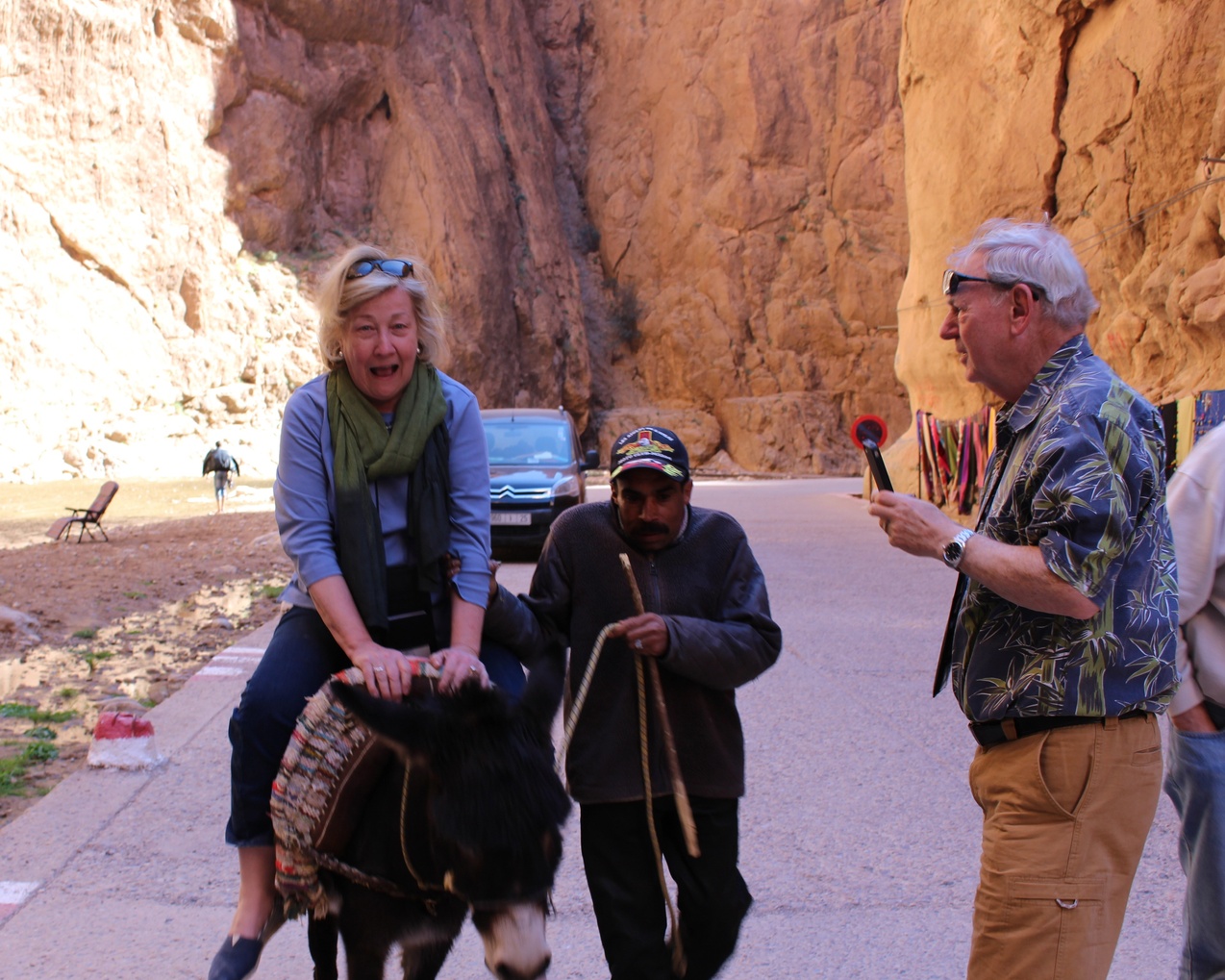
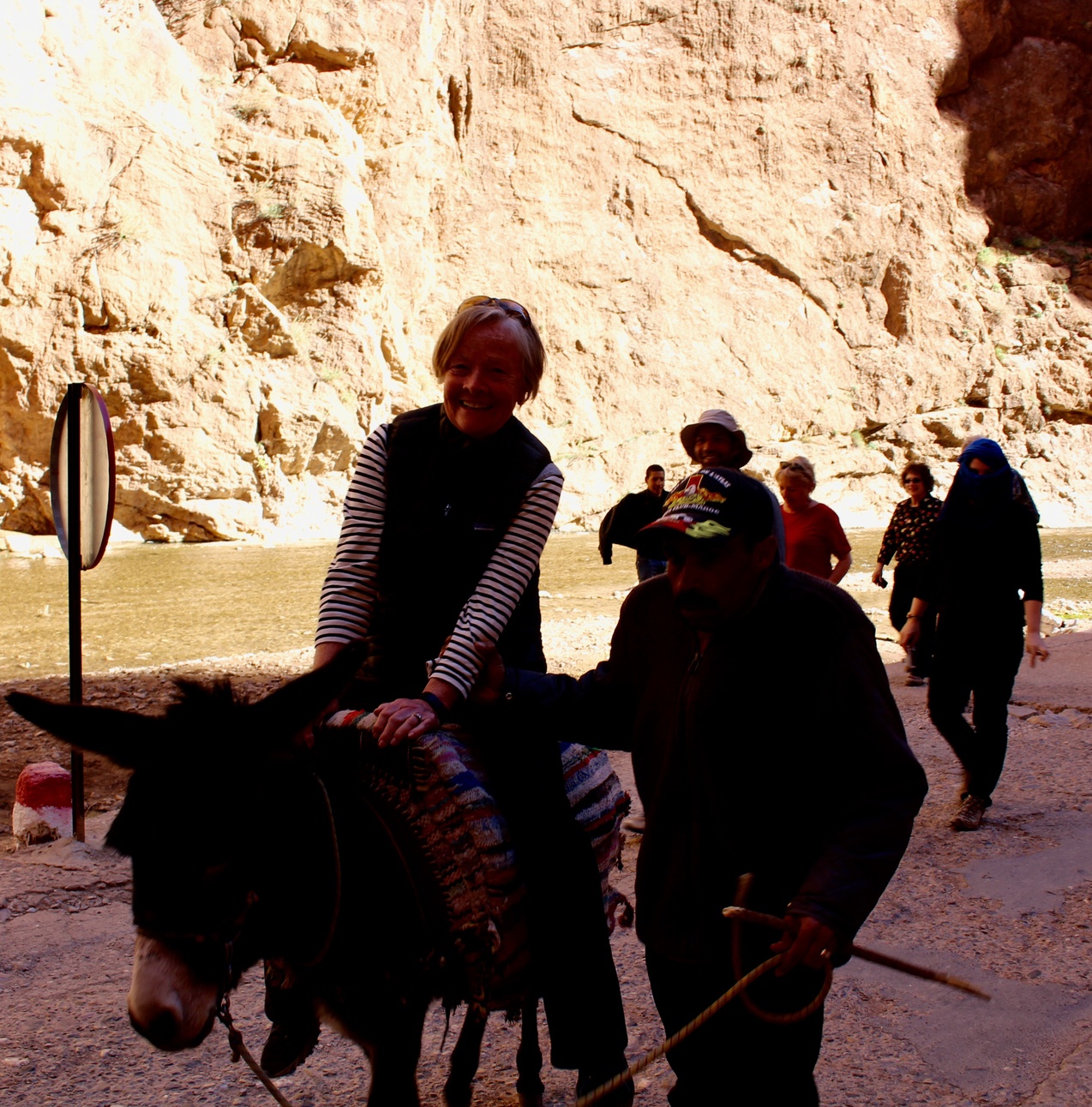
After watching school- age children do so, my sister and I took a chance on riding a mule. Clearly Mary was a lot more comfortable on the back of a mule than I was!
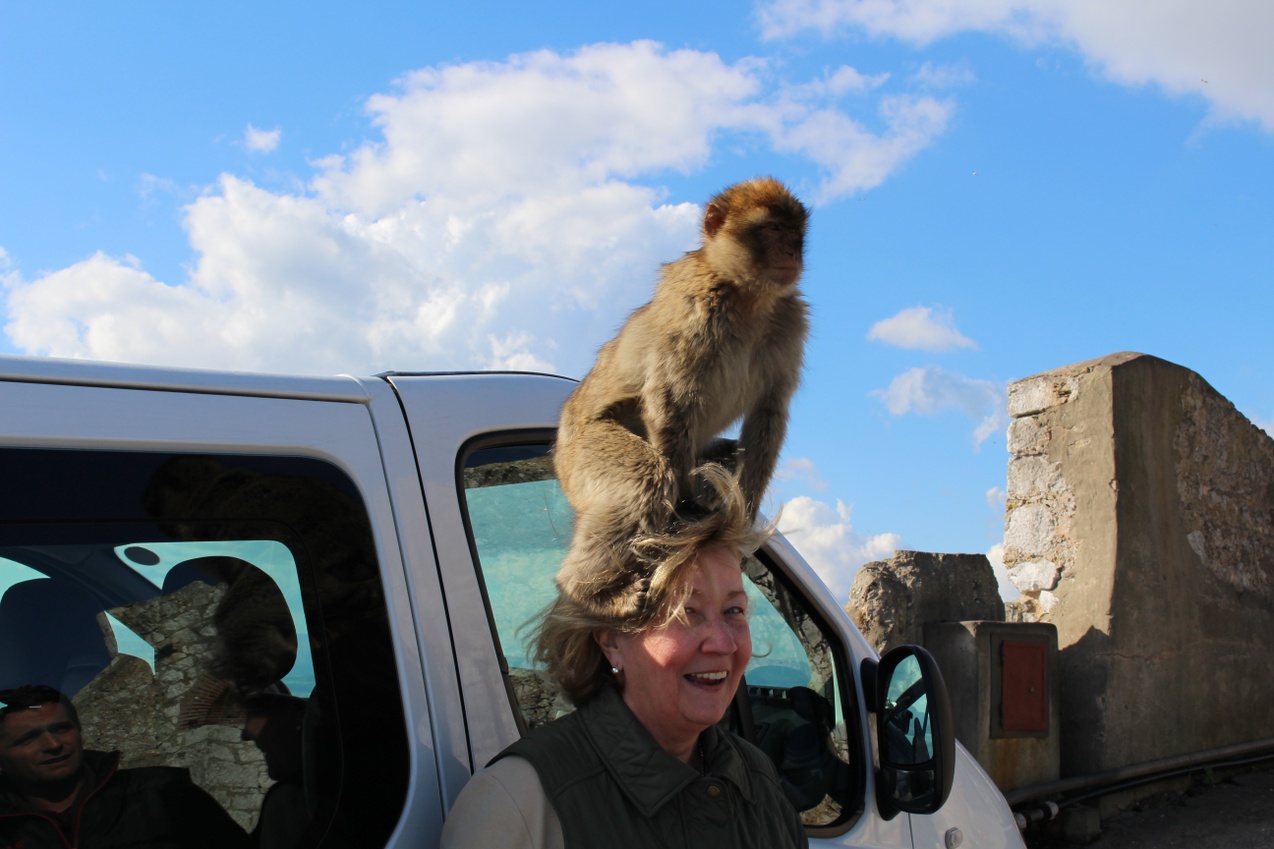
We danced … … we played with monkeys … . . and charmed snakes.
The High-Atlas mountains were breathtakingly beautiful.
There was so much to feel and experience in Morocco:
The beauty of the mountains,
Experiencing the Sahara desert—
* The feeling wonderment and awe we experienced walking the orange colored sand-dunes,
* Seeing our footprints in the Sahara sand, (who would have ever imagined walking in the Sahara desert?)
* Watching the sun rise and gazing at the innumerable stars in the sky at night,
Riding camels across the dunes,
Being welcomed into the home of a nomadic family
* Meandering the narrow lanes of the medians feeling as if we were back centuries ago as we bargained for goods,
* The amazing coastal areas.
But the highlight of our time in this far-off land were our visits and interactions with the Moroccan people. They are a caring, family oriented people who welcome strangers as if they were one of their own.
So, as they say in Arabic, “Yalla!” —- meaning “Lets go!” Yalla…. Let’s go to Morocco!!

 Growing up in Chicago in the '50's